ESA - For more than a decade, the International Space Station has been a busy orbiting research lab. But it could soon take on a new role as a testbed for ambitious missions deeper into space.
Future ventures could include Mars missions, lunar habitats or travelling to an asteroid – all needing new technologies and techniques that could be tested on the Station.
Following yesterday’s meeting of the orbital outpost’s Multilateral Coordination Board, member agencies expect to begin identifying specific technology initiatives based on sample exploration missions.
The Board meets periodically to coordinate Station activities, with senior representatives from ESA, NASA, the Canadian Space Agency, Russia’s Roscosmos and Japan’s Ministry of Education, Culture, Sports, Science and Technology.
The meeting also discussed standardising space systems, including the revised International Docking Systems Standard, as well as the Board’s effort to gather information on how successfully the Station has been used, the results of which will be published in September.
ESA use of Station
Exploitation of the Station’s research facilities is already well under way.
ESA astronaut Paolo Nespoli performed more than 30 experiments during his six-month MagISStra mission, which ended with his return to Earth in May.
Another European ’passenger’ – the life-size Matroshka mannequin – ended its latest tour of duty in March, after a year monitoring radiation inside Japan’s Kibo module. Paolo removed internal dosimeters from Matroshka for return to Earth.
Other European experiments have been retrieved from outside of the Station. The Expose-R package hosted nine biological samples, including plant seeds and bacterial spores, to study the effects of two years of direct space exposure.
Another space exposure experiment involved fungi known for damaging spacecraft materials. Russia’s Mir station was particularly afflicted by fungal growth.
ESA experiments on a variety of crew members are providing new insights into the effects of weightlessness on our balance and how we perceive motion and tilt.
Physical processes are also being probed: the last Shuttle mission recently delivered new samples for a furnace in ESA’s Columbus module to investigate rapid solidification of molten metals in weightlessness.
A Station for science
The Alpha Magnetic Spectrometer is a partnership of hundreds of scientists and 16 countries, designed by CERN and tested at ESA’s ESTEC technical centre. It has already collected more than two billion observations of galactic cosmic rays since in May 2011.
NASA has designated the Station’s US segment as a national laboratory to encourage its use by national agencies, private firms and universities.
The Canadian Space Agency and NASA will test robotic refuelling systems delivered to the Station by the last Shuttle.
Roscosmos is investigating wheat and vegetable cultivation and human adaptation to long flights.
The Station is being used as a platform for observing Earth, while Japan’s X-ray camera is looking in the other direction for cosmic objects such as black holes and neutron stars.
Ultimi Articoli

Ilze Brands Kehris nominata rappresentante speciale dell’UE per i diritti umani

Milano, il progetto STEP per il lavoro di 250 giovani: presentazione il 20 ottobre

Cucina italiana ad Atene, la Lombardia partecipa con quindici consorzi

Youth and Future a Palazzo Reale: le parole dei giovani diventano opere d’arte

Fibra ottica in provincia di Como: 145 comuni nel Piano Bul, oltre 144.000 immobili attivabili
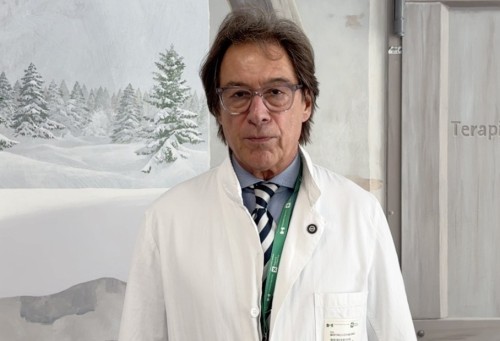
Leone, il neonato ritrovato a Cinisello Balsamo respira senza supporto

Gaza, dalla Lombardia altri 150mila euro per acqua e assistenza agli sfollati
Milano premia i suoi protagonisti: a Palazzo Marino otto “Volti della Metropoli” che raccontano il futuro della città

Premio Volti della Metropoli: a Palazzo Marino i riconoscimenti alla VI edizione