
Ultime Notizie
Spazio
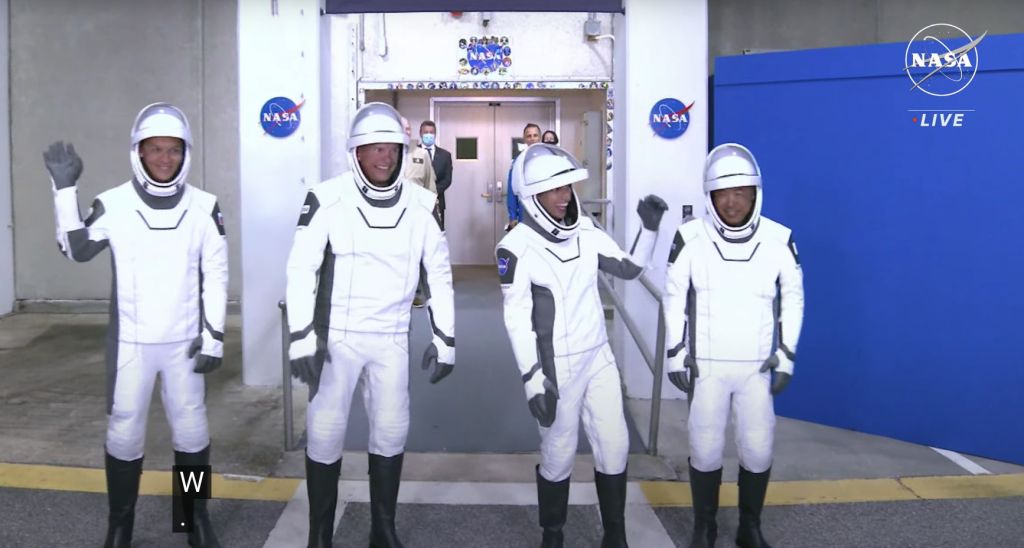
Decollo Epico per la Crew-7: Andreas Mogensen al Timone della Missione Huginn

Spazio
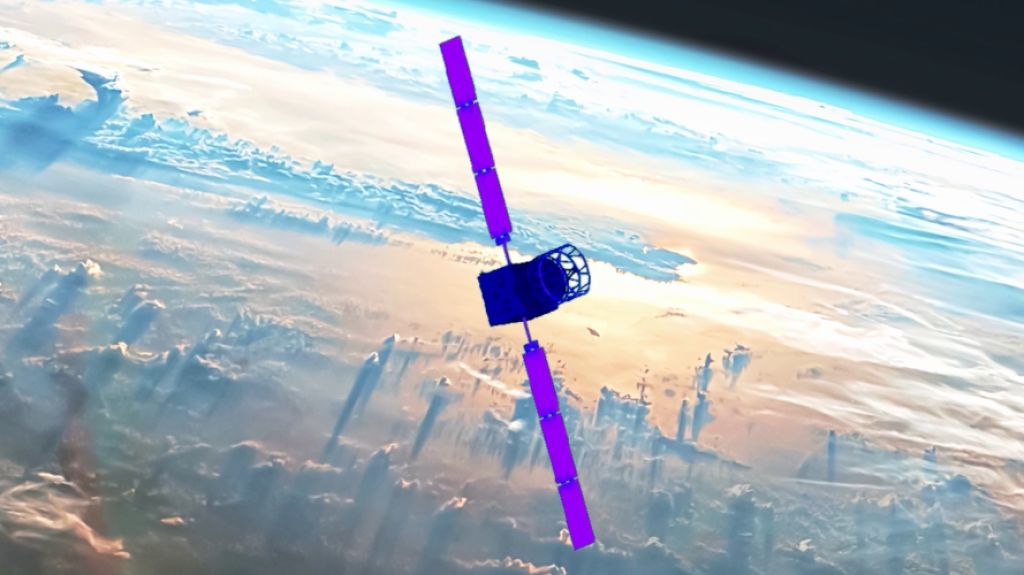
Eurialo: L'Aviazione Civile VolerĂ Altezza Spaziale con la Sorveglianza dei Satelliti
Sorvolando le nuvole con il sistema Eurialo: L'aviazione civile entra nell'era spaziale!
Spazio
Rientro sulla Terra: la straordinaria avventura di Aeolus
Journey back to Earth: Aeolus' historic reentry
Spazio
Donne e ragazze nella scienza: il team che ci ha aiutato a portarci su Marte
Spazio
Cheops dell'ESA trova un anello inaspettato attorno al pianeta nano Quaoar
IMMAGINE: Artist impression of Quaoar and its ring An artist’s impression of the dwarf planet Quaoar and its ring. Quaoar’s moon Weywot is shown on the left. Quaoar’s ring was discovered through a series of observations that took place between 2018 to 2021. Using a collection of ground-based telescopes, and ESA’s space-based telescope Cheops, astronomers watched as Quaoar crossed in front of a succession of distant stars, briefly blocking out their light as it passed. Read more [Image description: An artist illustration of the Quaoar system in front of a background of white stars. Central in the figure sits a brownish planet. This is Quaoar, a dwarf planet in the outer Solar System. At a distance of about five times its radius sits a ring. This ring is made up out of small grey pieces of debris. At twice the distance of the ring, to the left of Quaoar, sits its moon Weywot. Weywot looks about a sixth the size of Quaoar but has the same brownish colour. To the right of this system, we see a bright star. This star is bigger than the background stars and represents the distant Sun.] Acknowledgement: Work performed by ATG under contract for ESA © ESA, CC BY-SA 3.0 IGO
Spazio
Webb detects extremely small main-belt asteroid
A previously unknown 100–200-metre asteroid — roughly the size of Rome’s Colosseum — has been detected by an international team of European astronomers using the NASA/ESA/CSA James Webb Space Telescope. Their project used data from the calibration of the Mid-InfraRed Instrument (MIRI), in which the team serendipitously detected an interloping asteroid. The object is likely the smallest observed to date by Webb and may be an example of an object measuring under 1 kilometer in length within the main asteroid belt, located between Mars and Jupiter. More observations are needed to better characterize this object’s nature and properties.
Spazio
Webb rileva un asteroide della fascia principale estremamente piccolo
[Descrizione dell'immagine: l'impressione di questo artista mostra un asteroide grigio di forma irregolare su uno sfondo scuro.] © N. Bartmann (ESA/Webb), ESO/M. Kornmesser and S. Brunier, N. Risinger (skysurvey.org) Un asteroide di 100-200 metri precedentemente sconosciuto, all'incirca delle dimensioni del Colosseo di Roma, è stato rilevato da un team internazionale di astronomi europei utilizzando il telescopio spaziale James Webb della NASA/ESA/CSA. Il loro progetto ha utilizzato i dati della calibrazione del Mid-InfraRed Instrument (MIRI), in cui il team ha rilevato casualmente un asteroide interlocutorio. L'oggetto è probabilmente il più piccolo osservato fino ad oggi da Webb e potrebbe essere un esempio di un oggetto che misura meno di 1 chilometro di lunghezza all'interno della fascia principale degli asteroidi, situata tra Marte e Giove. Sono necessarie ulteriori osservazioni per caratterizzare meglio la natura e le proprietà di questo oggetto.
Spazio
Video ESA - Proba-2 vede due eclissi parziali
Spazio
ESA - Dallo spazio a Roma
Spazio
Il Sole come non l'avete mai visto prima
Spazio
Solar Orbiter’s highest resolution image ever of the Sun’s south pole
Spazio
Cosmic Kiss mission overview
German ESA astronaut Matthias Maurer has almost completed his first stay aboard the International Space Station ISS